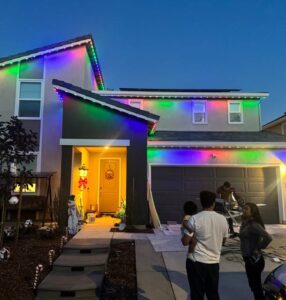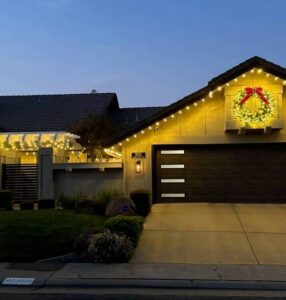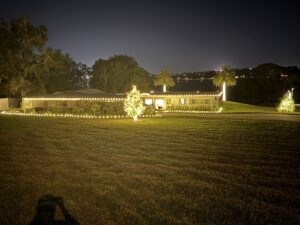
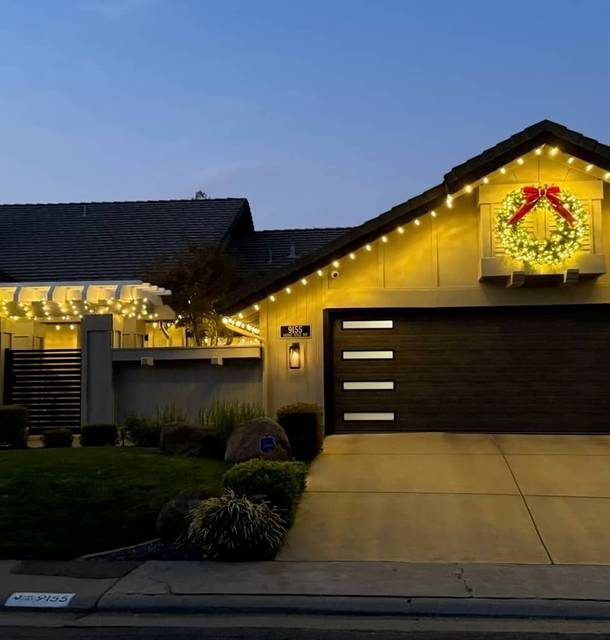
Warm white vs multicolor Christmas lights comes down to the feeling you want when you pull into the driveway. Warm white looks classic, calm and elegant, while multicolor looks cheerful, nostalgic and playful. Both look great in Central Florida, and the right choice depends on your home’s colors, its materials and who you are decorating for.
If you are torn between the two, you are not alone, because it is one of the most common decisions in holiday lighting. In this guide we explain how each option looks on Florida homes, how to mix them without the display looking busy, and a simple way to test your choice before you commit.
Warm White vs Multicolor Christmas Lights: The Quick Answer
Choose warm white if you want a timeless, upscale look that lets your home’s architecture stand out. Warm white Christmas lights give off a soft gold glow, similar to candlelight, and they pair well with almost any exterior.
Choose multicolor if you want a fun, traditional Christmas feel that kids love. Multicolor Christmas lights bring back the look many of us grew up with, and they stand out from far down the street.
Choose both if you want some of each. A warm white roofline with colorful trees or palm wraps is a popular combination because each part of the display has its own role.
It also helps to know that warm white is different from cool white. Cool white has a blue, icy tint, while warm white has a golden tint. On most Florida homes, warm white feels friendlier and matches porch lights and interior lighting better.
How Each Looks on Florida Houses
Your home’s exterior changes how the lights read from the street. These are the materials we see most often on Central Florida homes, and how each option tends to look on them.
Stucco
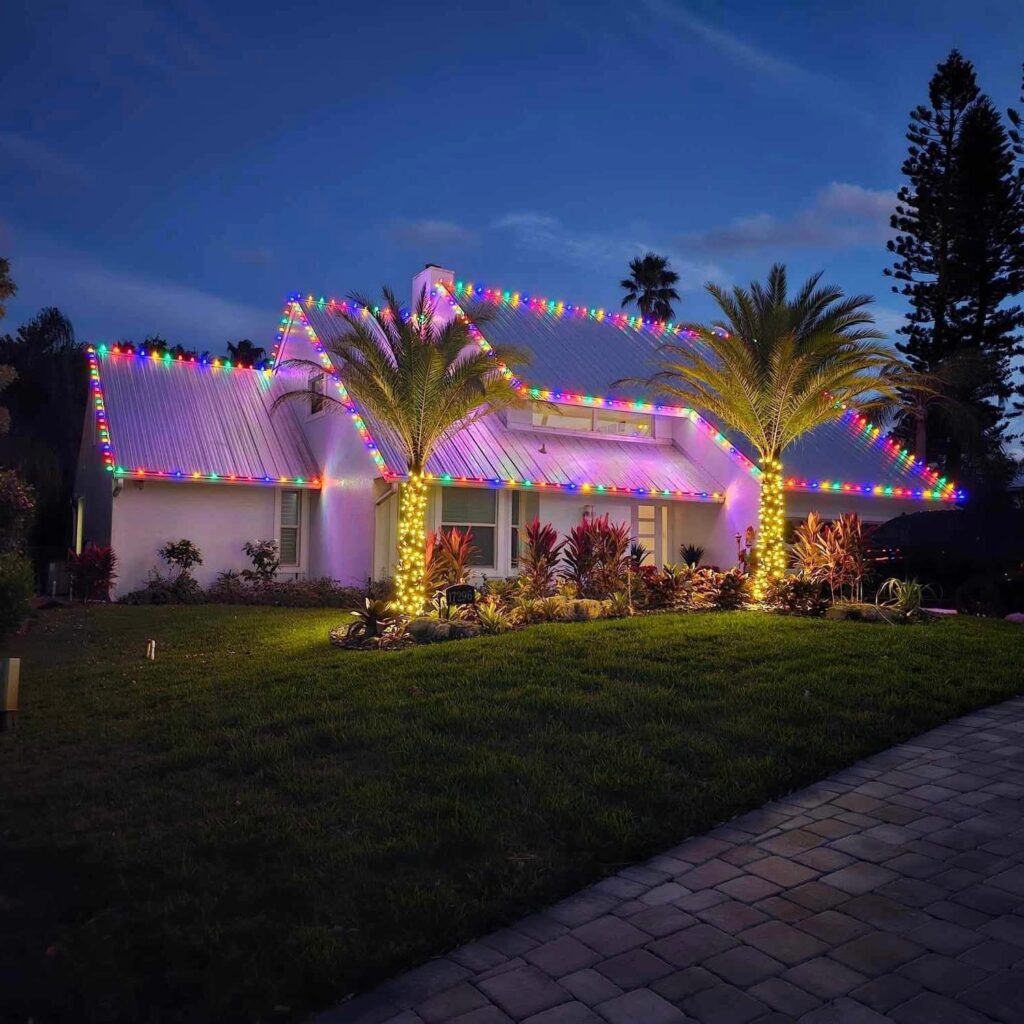
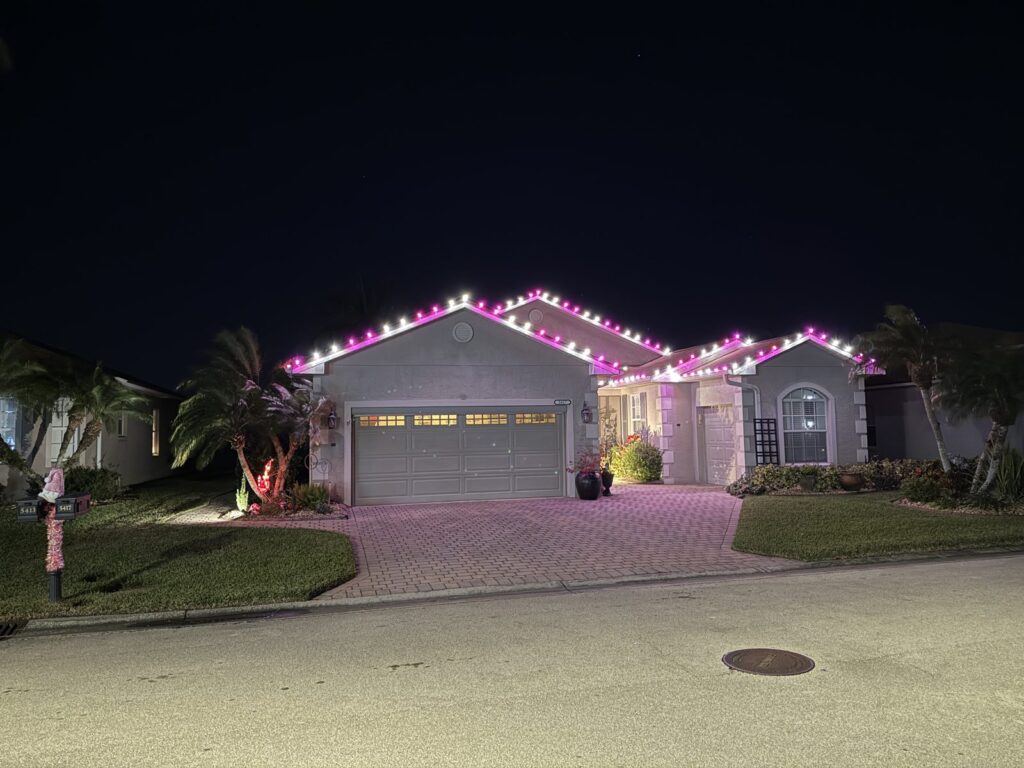
Light stucco in white, cream, beige or soft gray acts like a blank canvas. Warm white Christmas lights glow against it and give the whole house a gentle, golden outline. Multicolor lights also stand out on light stucco, and the color reflects slightly off the walls, which adds to the festive feel. On darker stucco, warm white usually gives the clearest outline.
Tile roofs
Barrel and terracotta tile roofs already have warm, earthy tones, and warm white complements them naturally. Multicolor can look great on tile as well, but it works best when the rest of the display is kept simple so the roof itself does not feel crowded.
Brick
Brick is warm and textured. Warm white makes it feel cozy and traditional, while multicolor on brick looks like an old-fashioned Christmas card. If you like red in your display, keep in mind that it can blend into red brick, so greens, blues and whites tend to stand out more.
Siding
Siding in white, gray, blue or sage gives crisp lines that lights follow well. Warm white keeps a coastal or farmhouse look soft, and multicolor on siding reads bright and playful. On blue or gray siding, warm white creates a pleasant contrast.
Mixing Warm White and Multicolor
You do not have to choose just one. Mixing works well when each color has its own job in the display.
- A white roofline with colored trees. Warm white outlines the house, and colored lights on trees, palms or shrubs add the fun. You get a clean outline and a playful yard.
- A colored roofline with a white landscape. This is less common, but it can look bold on a simple, single-story home with a clean roofline.
- A single accent color. Use warm white everywhere, with one color on a single feature, such as red on the palms or green on the shrubs.
The key is to keep each area consistent. Warm white and multicolor on the same roofline section usually looks accidental, but separating them by area makes the display look planned.
Classic vs Playful: What Your Choice Says
It helps to think about who will be looking at the lights, whether that is neighbors walking by after dinner, your kids on the drive home, or your family posing for a photo on the front steps.
Warm white comes across as calm, elegant and welcoming. It gives the impression of a home that is ready for company.
Multicolor comes across as joyful. It feels like the Christmas mornings many of us remember, and it is hard to look at without smiling. For families with young children, multicolor Christmas lights are often an easy decision.
Neither choice is more correct than the other. Warm white vs multicolor Christmas lights is a matter of style, and the best display is the one that makes your family happy when you come home.
Matching your home’s style
Your home’s architecture can also help you decide between warm white vs multicolor Christmas lights.
- Mediterranean and Spanish-style homes with tile roofs and arches often look best in warm white Christmas lights, which echo the warm tones of the tile.
- Modern homes with clean, flat lines can carry either one. Warm white keeps the look sleek, while a single bold color makes a statement.
- Coastal and farmhouse styles with siding and porches look inviting in warm white, and more playful with multicolor Christmas lights on the trees.
- Traditional brick homes suit both. Warm white feels formal, and multicolor feels like a classic holiday postcard.
If your home has many rooflines, gables or peaks, warm white Christmas lights can keep all that detail from looking busy. You can see both looks on real homes in our gallery.
Bulb Style: C9 vs Mini Lights
Color is only half of the look, because bulb style matters too.
C9 bulbs are the larger, classic bulbs you see outlining rooflines. They create a bold, even line that reads clearly from the street. C9s look great in both warm white and multicolor, and they give the traditional look many people picture when they think of Christmas lights on a house.
Mini lights are much smaller and more delicate. They are ideal for wrapping palm trunks, tree branches and shrubs, where you want a dense, sparkling glow rather than a bold outline.
Many displays use both, with C9s on the roofline for structure and minis in the landscape for texture. We supply commercial-grade LED lights for every display, so you never need to buy bulbs or figure out which strands match. The lights are ours, and we do not install customer-owned lights.
How to Test Your Choice From the Street
The view that matters most is the one from the street. Before you decide, we suggest these steps.
- Go outside at dusk. Stand at the curb or across the street, where neighbors and passing cars will see your home.
- Take a photo. Photograph the house from that spot and look at the lines of the roof, the palms and the trees.
- Consider each option. Think about how a warm white outline would look, then a multicolor one, and notice which feels more like your family.
- Look at nearby homes. The point is not to copy anyone, but to see what already looks good on homes like yours.
- Send us the photo. That same photo, along with your address, is all we need to measure your home and send you a quote, with no appointment required.
Getting Started
Whichever color you choose, our hanging service includes everything. That means the lights, timers, clips and hardware, the installation, free fixes all season under our Stay-Lit Guarantee, removal after New Year’s, and storage until next season.
Christmas light installation starts at $799, and our holiday packages show how the Starter, Classic and Premium options fit together. If you would like to switch between warm white and color whenever you want, you can also ask us about permanent lighting, which changes color from an app on your phone.
See both looks on real homes in our gallery, browse Christmas light ideas for Florida homes, or ask for either in your hanging service quote.
Frequently Asked Questions
Are warm white or multicolor Christmas lights more popular?
Both are popular, and many homes use both. Warm white is a favorite for a classic, elegant look, while multicolor is a favorite for families who want a fun, nostalgic feel. A common combination is a warm white roofline with colorful trees or palms, which gives you some of each.
What is the difference between warm white and cool white?
Warm white has a soft, golden glow similar to candlelight, while cool white has a crisper, bluish tint. On most Florida homes, warm white feels more welcoming and pairs better with porch lights, stucco and tile. Cool white can look striking on modern homes, but warm white is the more classic choice.
Can I mix warm white and multicolor lights?
Yes. The key is to give each color its own area. A warm white roofline with multicolor trees or palms looks planned and balanced. Mixing both colors on the same roofline section tends to look accidental, so keep each area consistent and let the contrast happen between areas.
Which Christmas light color looks best on a stucco house?
Both work well on light stucco. Warm white gives a soft golden outline that feels elegant, and multicolor stands out against the light walls for a festive look. On darker stucco, warm white usually shows the roofline most clearly. A photo taken from the street at dusk can help you compare the two.
Do warm white Christmas lights look better in photos?
Warm white Christmas lights tend to photograph cleanly because they give a soft, even outline that reads clearly in a picture of the whole house. Multicolor lights photograph well too, especially up close. For the best street photo of either, take your picture at dusk, while there is still a little blue left in the sky.